
From music and community work to climate action
k-k: What motivated you initially to start working at the intersection of culture and climate—and how did that initial spark evolve into your current work with Julie's Bicycle?

AT: “I started in 2007. I’d been working for 20 years in community music, so I was very tuned to issues of social relevance. I also come from a family that has done a lot of work on climate, in the context of diplomacy and science. At the same time, I was working in the music industry, and it struck me very forcibly that our response to climate change was largely limited to asking celebrities to campaign or commissioning artistic pieces. Unless we really root our responses in practice, in how we do things, we're not going to understand the nature of both the problem and the solution. It felt very obvious that there was a gap—and that’s why I started Julie’s Bicycle: to do a deep dive into what a bigger, very practical response to climate action could be.”

From carbon footprints to cultural policy
k-k: Julie’s Bicycle has been at the forefront of supporting the creative sector’s response to climate change. What are some of the most significant milestones or turning points that you have reached so far?
AT: “One of the first things we realised was that the music industry and broader cultural communities really wanted to do something practical. In 2007, we commissioned the first carbon footprint of the UK music industry, and that was revelatory. It showed that understanding climate change is about how we work, how we use resources, how we move—very practical things that are actually inspirational. That work led to our carbon footprinting tools and a systems-based way of thinking about culture and ecology.
A major shift came in 2009 when we began working on policy with the London mayor and started aligning cultural action with wider frameworks like national climate planning and, later, the Paris Climate Agreement. Then in 2012, Arts Council England adopted environmental requirements as a funding condition, and Julie’s Bicycle delivered that programme. That was a huge pivot, and we’re still seeing the consequences today. Change takes time—it’s long term and not linear.
Another turning point came with the Paris Climate Agreement in 2015. It invited non-state actors, including the cultural sector, and introduced the 1.5-degree framework and a collective roadmap for action. In 2017, we launched the Creative Climate Leadership programme after realising that many pioneers working at the intersection of culture and climate were isolated, unsupported, and lacked shared language. That was when it became clear this was a movement, and the question became how to help build it.
More recently, there’s been enormous growth in cultural climate action. There’s no longer any need to justify the relationship between culture and climate. What’s been missing is a strong policy framework to support this work—and that’s where current efforts are focused.”
Why culture belongs at the climate summits
AT: “The key to this work is that it’s been led by a strong movement of cultural and creative activists on the ground. Ministers of culture from around 56 countries now form the Group of Friends of Culture-Based Climate Action, pressing state parties within the UNFCCC (United Nations Framework Convention on Climate Change). This creates a landscape where international policy can shift, particularly around the global goal for adaptation.”
Between scarcity and overwhelm: common challenges for cultural organisations
k-k: You’ve worked with a wide range of cultural organisations—from grassroot groups to major institutions. What kinds of challenges do you encounter most often when helping them become more environmentally sustainable?
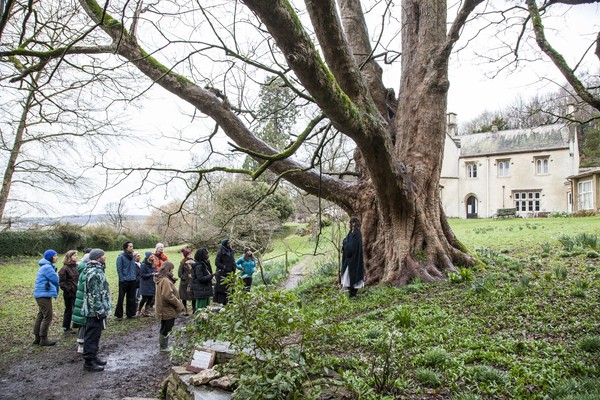
AT: “The challenges depend on context. Sometimes there’s a culture of scarcity because money is short, or a culture of overwhelm because climate change and justice feel so big. Overcoming fear, despair and trepidation is crucial. The best way to do that is through community, inspiration from peers, and bringing joy and agency into the work. It’s not just about reducing carbon emissions to net zero—that’s important, but there’s so much more. Caring for ourselves and our communities, staying informed, and opening our imaginations to the full range of possibilities really matters.”
Working across borders
k-k: Julie’s Bicycle is increasingly active in international networks. What have you learned from working across different cultural and national contexts, particularly in continental Europe compared to England?
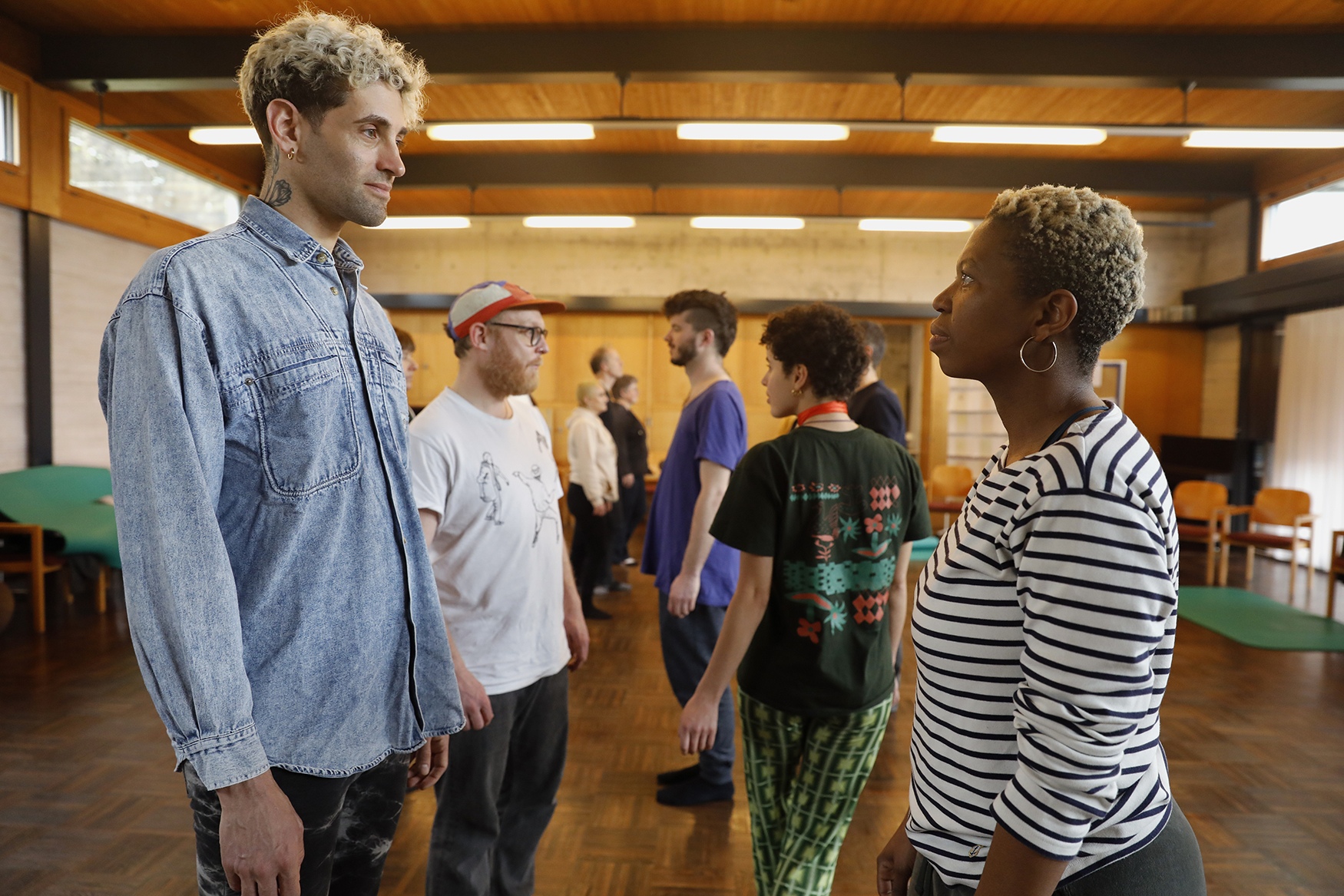
AT: “One of the most important things in international work is humility and deep partnership. There’s no one-size-fits-all approach because everyone works within specific cultural and socio-political contexts. Our role is to co-learn and identify what’s useful in each place. We’ve learned enormously from global majority voices, indigenous thinking, and different cosmologies, particularly in South America. Successful networks are fundamentally about the quality of relationships, shared ethics and values, and culturally specific action.”
The double edge of policy: why public frameworks matter—and where they fail
k-k: What role do you think policy frameworks and public mandates play in driving sustainability in the cultural sector. And what risks do they carry?
AT: “Policy can be good or bad. We’ve seen how public policy can be eroded or misused, and how concepts like net zero can be diluted into greenwashing. Policy is often unambitious and needs reform, but without it we would erode law and accountability. A lot of progress is currently being made through legal frameworks, so despite its flaws, public policy remains critical.”
Looking ahead: strengthening movements, ethics and solidarity
k-k: What are the most urgent areas of work for Julie’s Bicycle in the next few years—and where do you see potential for deeper international cooperation?
AT: “The most urgent task is to strengthen the growing cultural movement. That includes work on cultural adaptation, not just physical adaptation, and embedding climate and environmental justice as an ethical framework for how we act. One of our biggest challenges are the far-right movements. The question is how we come together respectfully, guided by care, solidarity and justice, to create realistic alternatives. We need to find a way forward together.”
Biography
Alison Tickell
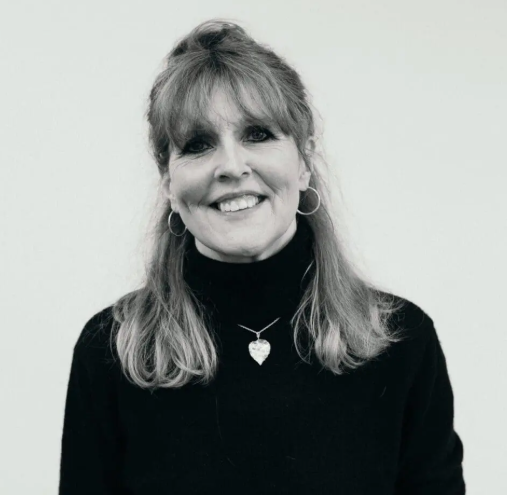



Alison Tickell is a climate and cultural activist and the founder of Julie’s Bicycle, an international nonprofit organization that promotes culture-based solutions to the climate and nature crisis with a focus on equity.
She is a trained musician and community arts practitioner. She was influenced by jazz educator John Stevens, whose understanding of music as a form of collective activism has had a decisive impact on the core values of Julie’s Bicycle. These include attentiveness, reciprocity, respect, creativity, and a sense of community.
Alison collaborates with policymakers, businesses, artists, and cultural leaders to strengthen a regenerative culture, advance climate action, and promote social justice. She is an Ashoka Fellow, volunteers with Global Artivism, and advocates for embedding culture as an integral part of climate policy.